

Use of Body Language in Criminology

The use of the knowledge of body language spreads to various fields and occupations. One of which is law enforcement. It is extremely important for law enforcement officers to be able to read and interpret body language in order to defuse potentially dangerous situations and determine whether people are telling the truth or not. While it may seem like unnecessary knowledge to have, understanding body language has proved to be a key skill in many experienced officers.
Once understood, body language cues can be fairly easy to understand. This is because, body language cues like gestures, posture, eye movement etc. are generally involuntary. This aids the officer in understanding the criminal and whether they are honest or not. People’s actions almost always give away their intentions. So, it is important for a law enforcement officer to be able to read these actions in order to understand their state of mind. If a suspect makes a sudden move, police officers need to make split-second decisions based on their suspect’s actions, that could potentially save lives.
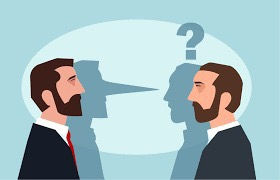
Along with understanding a suspect’s actions in a potentially dangerous situation, law enforcement officers must also be able to pick up certain cues that could tell them if they’re being lied to. While many people think certain cues like avoiding eye contact, looking in one direction, touching one’s face, clearing one’s throat etc. are indications that a person is lying, Joe Navarro, an FBI veteran in counterintelligence agent, believes otherwise.
In a book written by Navarro, he asserts that more than 215 behaviors are linked to psychological discomfort but these are mostly undetectable in facial expression alone. It was shown that the positioning of people’s feet can unintentionally reveal their true feelings. Even though people’s facial appearances appear normal or calm, the cues made by the positioning of their feet can reveal otherwise. This is because people are bound by social manners, or in the case of criminals, deceit, and may present information in an acceptable way using the prefrontal cortex. However, the most primitive part of the human brain the limbic system can unconsciously override the desires of the prefrontal cortex. This indicates how the limbic system can portray the truth in a more accurate manner than facial expressions.
Another important observation made by Navarro was that those who are innocent generally appear to stay cool whereas guilty suspects would display “ventilating behaviors”. These refer to actions such as running hands through one’s hair, pulling at collars etc. in an attempt to cool off. Apart from this, another factor for law enforcement officers to look out for is the pacifying action of touching the neck and chin. This automatic action is generally seen when people are lying in an attempt to soothe themselves in the stressful situation.
While all of these cues to look out for generally hold true in most cases, it is also important for officers to take into consideration the psychological condition of the suspect. For instance, many people who are neurodiverse may display behaviors that are consistent with a liar, however, it may be just a self- soothing response for them in an unfamiliar situation.
This is why, in totality, the knowledge of body language is a crucial aspect for law enforcement officers and it may be just the thing that could save your life in a dangerous situation as well.
BIBLIOGRAPHY:
#:~:text=Fortunately%2C%20body%20language%20cues%20like,see%20through%20a%20criminals'%20facade
Comments